
Symptoms and Emotions of Falling in Love:
A Perspective from Psychology and Neuroscience
Falling in love is one of the most intense and transformative human experiences, characterized by a cascade of emotional, cognitive, and physical symptoms that reflect the complexity of our psychobiological functioning. From contemporary psychology, it is understood as the initial phase of an affective experience marked by intense attraction, mental reorganization, and neurophysiological changes that affect perception, judgment, and behavior.
A Scene That Reveals the Human Search for Love
In the center of Tandil, years ago, a man announced himself in the town square holding a sign that read:
"I'll read your palm and tell you the truth: if they're unfaithful to you, you'll know for just $20."
People lined up. Some sought certainty, others comfort, many simply wanted to understand that elusive feeling we call love. The scene — half humorous, half desperate — shows that even today, well into the 21st century, we're still searching for explanations. José Antonio Marina sums it up well: love is not an emotion but a complex web of affections and desires, multiple overlapping layers.
That difficulty in defining it is not new. Saint John of the Cross described it as an ungraspable "I know not what." Stendhal distinguished between passion-love, taste-love, and vanity-love. The Greeks spoke of Eros (desire) and Philia (friendship). In all cases, a central element emerges: desire as a force that organizes behavior and idealizes the beloved.
Psychological Definition and Theoretical Models
Psychology defines falling in love as "an intense desire for union with another person" (Fisher, 2004), emphasizing its motivational, directional, and selective nature.
It is not merely physical attraction: it is a psychobiological state that reorders priorities, focuses attention, and activates a reward circuit.
Sternberg's triangular theory complements this view: falling in love involves a dynamic interplay between intimacy, passion, and commitment, which don't always appear together but act as the vertebrae of romantic love.
Evolutionary Perspective: Why We Fall in Love
Falling in love is not an emotional accident: it is an evolutionary strategy that favored human survival.
1. Focus and Biological Economy
When someone acquires emotional significance, the mind narrows its attentional focus. "Background noise" is reduced and interest in a single individual intensifies.
"Falling in love organizes us, focuses us, and drives us toward a single bond"
2. Mate Selection
A cross-cultural study with 10,047 participants across 37 cultures showed that "mutual attraction and love" is the most valued criterion when choosing a partner (Buss, 2018). This pattern suggests that love is a universal trait, repeatedly selected for its adaptive function.
3. Cooperation and Offspring Survival
Human babies require years of care. Falling in love facilitates closeness; attachment sustains prolonged cooperation.
"Love functions as a biological contract reinforced by emotion"
4. Initial Neurochemical Impulse
Phenylethylamine (PEA) triggers energy, enthusiasm, and motivation for approach.
Emotional and Cognitive Symptoms
Falling in love invades the mind and alters daily life. Intrusive thoughts are constant, recurrent, and difficult to regulate. The person idealizes the other, interprets them positively, and attributes exceptional value even to ambiguous traits.
"Falling in love invades the mind and temporarily reconfigures perception"
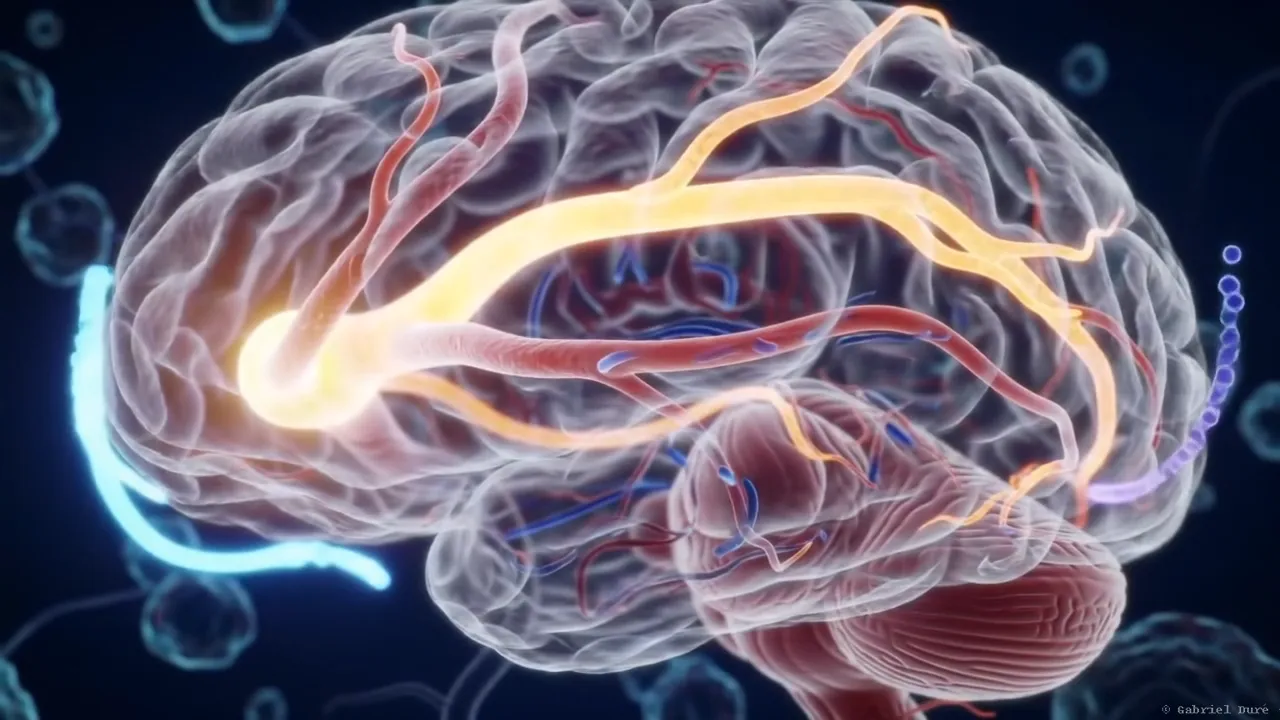
Neuroscience of Love
Cognitive biases: focus and idealization
Attention contracts toward a single individual: a "directed mania." Dopamine inhibited in the prefrontal cortex reduces critical judgment, generating classic love blindness.
"Between hope and insecurity, the person in love lives in constant flux"
Physical and Neurobiological Manifestations
Body and brain act in sync, generating a perfect storm of sensations and chemicals:
Physical Manifestations
- Palpitations and rapid heartbeat
- Sweating (sweaty hands)
- "Butterflies in the stomach" (visceral anxiety)
- Accelerated breathing
- Insomnia or sleep disturbances
- Loss of appetite
- Pupil dilation when seeing the other person
Neurobiology / Chemistry
- Dopamine: Generates energy, focused attention, and intense euphoria.
- Noradrenaline: Produces alertness, vigilance, and enhances selective memory.
- Low Serotonin: Responsible for obsessive, recurrent thoughts about the person.
- PEA (Phenylethylamine): The "accelerator" that produces the feeling of exhilaration.
- Oxytocin and Vasopressin: Gradually appear to promote calm and long-term attachment.
Infographic: The Chemistry of Love
The engine of desire. Generates euphoria, energy, and intense motivation.
Levels drop, causing obsessive thinking about the other person.
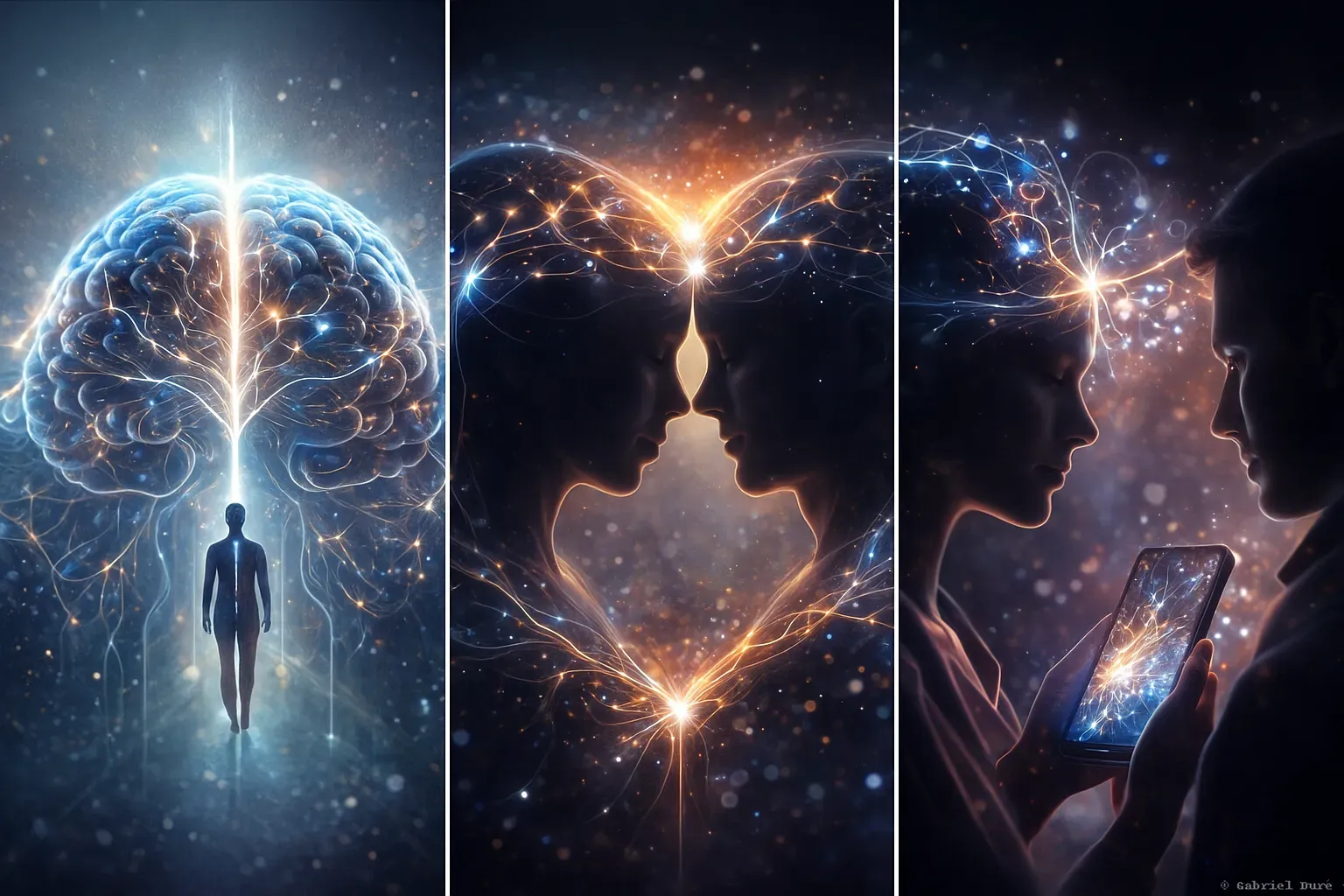
The bonding hormone. Fosters trust and calm after the passion phase.
Swipe to see more
Clinical Picture of Falling in Love (Symptomatology)
Falling in love generates symptoms similar to stress or addiction.
- Physical symptoms: restlessness, butterflies in the stomach, rapid heartbeat, anxiety, insomnia.
- Obsession: low serotonin fosters repetitive thoughts that are hard to stop.
- Loss of judgment: dopamine and noradrenaline reduce rational analysis.
- Addictive analogy: the brain seeks immediate relief; absence hurts like withdrawal.
- Heartbreak as trauma: activates deep emotional memories and attachment wounds.
Neurochemistry of Falling in Love and Heartbreak
Dopamine is the engine of falling in love (Fisher, 2004). In heartbreak, a sharp drop occurs, generating emotional and physiological pain.
"Heartbreak hurts because it breaks a reward circuit"
The prefrontal cortex intervenes slowly to restore balance, regulate emotions, and rebuild identity.
How Prior Learning Shapes Falling in Love
Falling in love is experienced over an emotional template formed since childhood.
- cultural beliefs
- learned expectations
- prior experiences
- attachment styles
Intense bonds can activate old affective memories, producing chaotic or addictive relationships.
"Adult love is, often, a repetition or a search for repair"
With awareness and appropriate support, these patterns can be transformed into corrective experiences.
Love Bombing, Anxious Attachment, and Affective Manipulation in the Digital Age
In recent years, clinical psychology has begun to observe a phenomenon easily confused with falling in love: love bombing. This pattern appears when a person offers an avalanche of attention, emotional intensity, and excessive affective demonstrations, with the goal — conscious or not — of generating dependency and accelerating bonding.
Although it can perfectly mimic the symptoms of falling in love, love bombing lacks emotional stability and usually precedes cycles of withdrawal, indifference, or manipulation.
From a psychobiological perspective, love bombing acts on the same dopaminergic reward system circuits: constant messages, promises, excessive availability, and continuous validation generate dopamine spikes the brain interprets as genuine closeness. However, the next phase — abrupt withdrawal — produces a sharp emotional drop that reinforces compulsive pursuit of the other. This cycle is particularly damaging for people with anxious attachment, whose vulnerability to fear of abandonment amplifies emotional dependency.
The initial overstimulation phase produces extreme idealization, perceptual distortion, and loss of critical judgment, similar to "love blindness." However, unlike healthy falling in love, love bombing does not evolve toward a stable attachment state, but toward an intermittent dynamic that continuously activates alarm and need circuits.
In digital contexts, this phenomenon intensifies. Immediate communication, constant availability, and multiple channels (WhatsApp, Instagram, video calls) enhance manipulation capacity and make it difficult to distinguish between authentic connection and artificial stimulation. Clinical practice observes that many people confuse intensity with love, when in reality it is an emotionally risky pattern that erodes self-esteem and hinders the construction of secure bonds.
A key differential criterion is consistency: healthy falling in love maintains coherence between words and actions, while love bombing is oscillatory, invasive, and dependent on the emotional impact it generates.
Cultural Differences in Experiencing Love
In individualistic cultures, love is associated with self-fulfillment. In collectivist cultures, with family and group continuity. These orientations change how we feel, choose, and sustain relationships.
Algorithms, Mate Selection, and the New Digital Architecture of Falling in Love

Current relationships are deeply influenced by technology, not only in communication but also in how we choose partners. Today, the first selection — once performed by social context or family — is mediated by algorithms that sort, filter, and prioritize profiles according to digital behavioral patterns.
Dating platforms operate under variable reinforcement systems, a well-known mechanism in neuroscience: unpredictable rewards (a match, a message, an unexpected like) trigger more intense dopamine spikes than constant rewards. This circuit keeps the user in permanent search, generating a sense of infinite possibility that alters perception of the other and the notion of commitment.
Psychologically, continuous exposure to a "human showcase" increases comparison bias and reduces frustration tolerance. The brain, accustomed to an abundance of options, may develop the illusion that there's always a better alternative. This fragments the capacity for focus — key in traditional falling in love — and favors superficial or disposable bonds.
However, algorithms can also enhance real connections: by grouping people with similar interests or lifestyles, they facilitate encounters that would previously have been improbable. The central issue is that modern falling in love occurs in an ecosystem where the brain must process more stimuli than ever, many of them designed to capture attention and shape preferences.
The current clinical challenge is distinguishing between authentic affinity and affinity constructed by algorithmic patterns. Understanding this context allows us to accompany patients experiencing relational anxiety, emotional fatigue, or platform addiction — increasingly frequent phenomena in clinical practice.
Technology, Bonds, and the New Biology of Love
- Functional neuroimaging: fMRI allows real-time observation of brain activation in love.
- Digitalization of bonding: hyperconnectivity can intensify bonds, but also prolong grief after a breakup.
- Affective biotechnology: psychiatry is investigating drugs capable of modulating desire, attachment, and suffering.
Conclusion
Falling in love is a phenomenon where evolution, neurobiology, psychology, culture, and technology converge. Understanding it allows us to better accompany those who experience it and promote more conscious, healthy bonds.
The challenge is balancing emotional intensity with the capacity for adaptation.
And, above all: love must not be submission, but free giving. Remaining in a relationship is always an act of will.
Falling in love, in all its forms — from the fleeting to the profound — is an experience that shows us how vibrant and dynamic our emotional life can be. It invites us to rediscover ourselves, to live with intensity and laugh at our own awkwardness, because, after all, who hasn't felt that nervous tingle when receiving a simple message? That magic of feeling alive.
Bibliographic References
- Aron, A., et al. (2005). Reward, motivation, and emotion systems associated with early-stage intense romantic love. Journal of Neurophysiology.
- Buss, D. M. (2018). The Evolution of Desire. Basic Books.
- Fisher, H. (2004). Why We Love: The Nature and Chemistry of Romantic Love. Henry Holt.
- Sternberg, R. J. (1986). A triangular theory of love. Psychological Review.
Relationship Help
Support for relationship crises:
-
Internationalfindahelpline.com
-
Crisis Support
Recommended Readings
- Fisher, H. - Why We Love.
- Fromm, E. - The Art of Loving.
- Bauman, Z. - Liquid Love.