
Anxiety, Anguish and Stress:
An Existential Journey
"Anxiety is the price of the ticket to life; intrapsychic depression is the by-product of refusing to get on board."
This phrase distills a profound truth of human existence: living means crossing restlessness, doubt, anticipation of danger, and confronting the mystery of personal meaning and freedom. Anguish and anxiety are not system failures — they are a reflection of having become aware of the vertigo of being alive.
That existential restlessness, which sometimes overwhelms and paralyzes us, can be transformed into a motor of growth and authenticity. The human journey is essentially a passage through discomfort, fear of the future, the weight of stress — but above all the finite and free consciousness of our being. Existentialism understands anguish and anxiety as teachers rather than enemies.
I. The Existential Thread: Kierkegaard, Rollo May and the Inner Crisis
Kierkegaard is central to the conceptualization of existential anguish, seeing it as awareness of freedom and possibility. "Anxiety is the dizziness of freedom" — and the possibility of choosing, of genuinely taking charge of one's own existence. Rollo May describes anxiety as teacher and motor of growth, driving the individual to confront the prospect of realizing their potentialities. Hannah Arendt highlights anguish as a response to the irreversibility and uncertainty of human action. Irvin Yalom adds: "Life and death are interdependent: although physical death destroys us, the idea of it saves us."
II. The Anatomy of Anguish: A Deep Look at Kierkegaard
The concept of Angst (anguish), originally developed by Søren Kierkegaard, is understood as "the inevitable consequence of choosing to become a human being, having uprooted oneself from one's primary reality and chosen to be free." This definition underscores the existential nature of anguish, inseparable from the human condition and from freedom:
- Freedom and Responsibility: Anguish is a clear signal of the freedom the human being enjoys and of the responsibility inherent in those choices. For philosopher Marta Zátonyi, who applies this concept to filmmaker Ingmar Bergman: "Without anguish there is no human being, no greatness, no life worth living."
- Uprootedness and Shipwreck: Anguish arises from the act of separating from "primary reality." This "Kierkegaardian existential anguish" is illustrated in the "modern pathos of ego shipwreck" (loss of identity) in secularized societies, where reason and techno-science have consolidated a cultural paradigm that led to the "death of God" as a source of meaning and hope.
- Possibility and Despair: Kierkegaard's thought highlights that existence is defined by categories such as possibility and anguish. Anguish is directly linked to the despair caused by the illusion of infinite options:
- If "possibility exceeds necessity," the self drifts away from itself by having no necessity to return to, resulting in "the despair of possibility."
- Having so many possibilities and being unable to live them all causes "anxiety and fear of having made the wrong decision," which prevents the realization of personal identity.
- Fear and Decision: Anguish also relates to social and existential fear. Fear in contemporary society has been described as "'the reality of freedom as possibility before possibility.'" The true motive of a "failed life" is often the desire to avoid the risk of decision. However, Kierkegaard affirms that every relevant decision for vital praxis is a risk that "is lived forward and understood backward."
III. Anxiety, Anguish and Stress: Differences Under the Existential Lens
The distinction between anxiety and anguish is historically complex and often ambiguous, as both terms have been used interchangeably in everyday language and various psychological schools. The confusion traces back to the translation of the German term Angst (used by Freud and existential philosophers), which in some languages was rendered as both anxiety and anguish. Despite this overlap, sources distinguish these concepts primarily through their nature, object, and symptomatic manifestation:
Difference by Object
| Parameter | Anxiety (Clinical) | Anguish (Existential) |
|---|---|---|
| Object or Cause | Arises before future, indefinable or unpredictable danger. Response to an identifiable threat. | Lacks a concrete object. Arises before freedom, possibility, solitude, and helplessness. |
| Focus | Anticipation of catastrophe or imminent danger. | Direct awareness of freedom and responsibility. |
| Existentialism | Does not address subjective infinity. | Anguish is born from imagining infinite possibilities (Sartre, Kierkegaard). |
Difference by Nature
| Parameter | Anxiety (Clinical) | Anguish (Existential) |
|---|---|---|
| Nature | Symptom, emotion, or disorder. Adaptive and also pathological if excessive. | Ontological condition, fundamental affect of human existence. |
| Function | Crucial for survival, but must be mitigated if it becomes pathological. | Positive and educational character; Rollo May considers it a teacher. |
| Relation to the Self | When pathological, generates blocking and avoidance. | Awareness of freedom, responsibility, and authenticity. |
Difference by Symptoms and Physical Reaction
| Manifestation | Anguish | Anxiety |
|---|---|---|
| Symptoms | Physical (somatic), visceral. | Psychic/cognitive. |
| Physical character | Obstructive, constriction and oppression. | Combination of cognitive and physiological symptoms. |
| Motor reaction | Paralysis or overwhelm. | Startle and motor action. |
| Perception | Unclear, confused. | Clear, defined. |
IV. Educational Analogy: The Car, the Fog, and Anguish
Think of your life as a car. Fear is the sensor that detects an object right in front of you. Pathological anxiety is an alarm system that goes off constantly, even when there is no intruder or danger (a malfunction requiring the mechanic — or therapist — to fix it). Stress is the weight you put in the trunk; if it's too much, the car becomes unbalanced.
Existential Anguish, on the other hand, is the awareness that you are driving that car along a fog-covered road, without a perfect map, knowing that at any moment you could take an irreversible turn and that the journey will end. You cannot eliminate the fog, but by accepting this uncertainty (Anguish), you are forced to take the wheel with responsibility and to seek a path that feels meaningful (Purpose and Freedom).
V. Etiology of Distress: Biopsychosocial and Existential
- Biological: Genetics, neurophysiology (locus coeruleus, amygdala, prefrontal cortex).
- Psychological: Dysfunctional thoughts, modeling, avoidance patterns.
- Sociocultural: Roles, gender, discrimination, poverty, life context.
The existential crisis can arise as the sum of stressors and internal conflicts leading to states of emptiness and personal re-evaluation. Anxiety and anguish appear as radical questions about life and the authenticity of one's own path.
VI. Existential and Clinical Tools for Integrating Anxiety
- Review personal values and beliefs.
- Tolerate the ambiguity and uncertainty inherent to freedom.
- Let anguish teach us about finitude and awaken existential responsibility.
- Apply Cognitive Behavioral Therapy and Stoic thinking to distinguish what is controllable.
- Embrace the here and now — the privilege of existing.
- Use isolation as an opportunity for self-knowledge and authenticity.
VII. Nomophobia: Technological Anxiety and Digital Reward
Nomophobia is a psychological phenomenon of growing relevance, defined as the irrational fear of being without access to a mobile phone or disconnected from the digital environment. Numerous studies confirm that intensive smartphone use increases vulnerability to nomophobia, especially among adolescents and young adults.
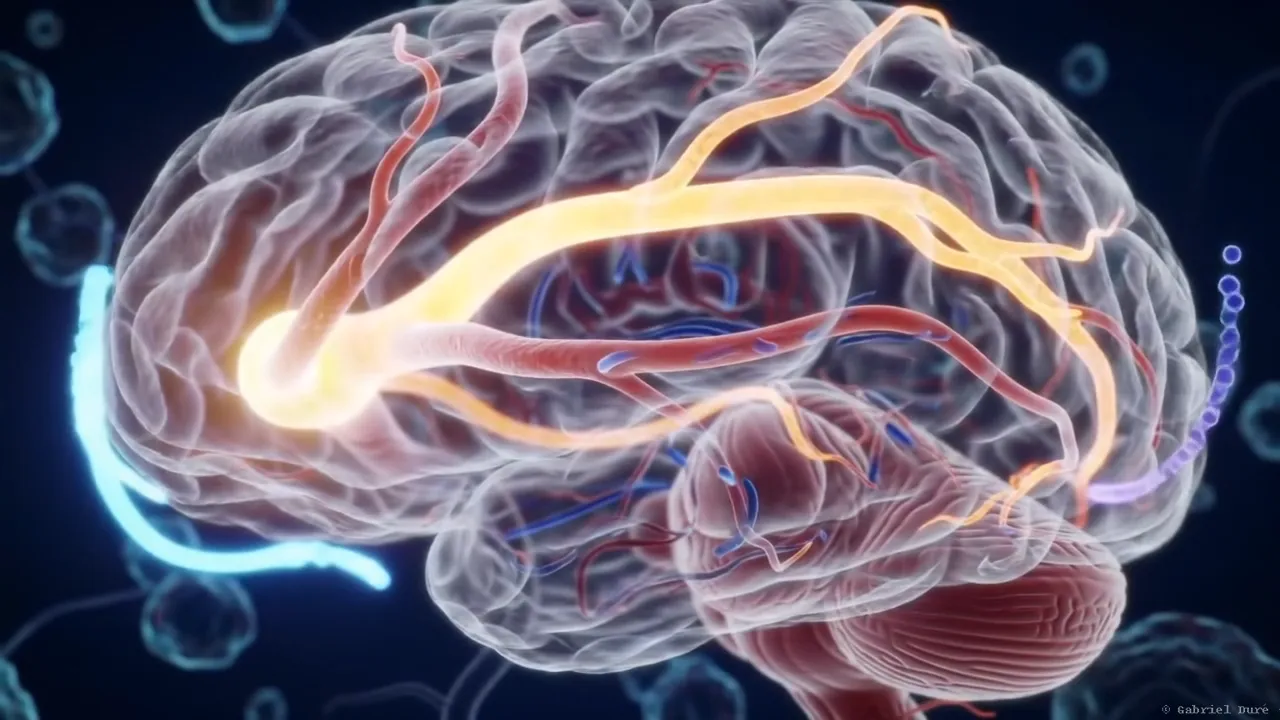
From neuroscience, this anxiety is linked to the dopaminergic reward circuits: each notification releases small doses of dopamine that reinforce compulsive use. Nomophobia also connects with the sense of insecurity and perceived "self-efficacy"; many authors describe that feeling unable to be without one's phone can trigger severe distress.
Go deeper: Read the full article "Nomophobia in Adolescents and Adults" on this blog, where these mechanisms are explored and detailed strategies are offered.
VIII. Synthesis: Two Levels of Human Suffering
The distress related to restlessness exists on two distinct levels:
The first level is pathological anxiety: the malfunction of an alarm system that fires constantly and inappropriately. This level requires clinical correction through interventions such as CBT, possibly supplemented with pharmacotherapy.
The second level is existential anguish: the inevitable awareness of our freedom, our possibilities, our responsibility, and our finitude. This is not an illness to be eliminated, but a condition to be confronted. Its conscious integration becomes a motor for the search for meaning and authentic living.
A profound truth, beautifully expressed by James Hollis, summarizes it: "Anxiety is the price of the ticket to life; intrapsychic depression is the by-product of refusing to get on board."
Closing: Living with Awareness and Authenticity
Anxiety, anguish, and stress are an inevitable part of the act of living. The true existentialist challenge is not to eliminate discomfort, but to transform it into an opportunity to take the wheel of our lives, decide our direction, and accept the journey with responsibility and purpose. Existential discomfort is a traveling companion, teacher, and motor — and authenticity becomes the destination.
Bibliographic References
- American Psychiatric Association. (1994). DSM-IV: Diagnostic and Statistical Manual of Mental Disorders. Masson.
- Borges, J. L. (n.d.). The Labyrinth [PDF]. University of Pittsburgh.
- Kierkegaard, S. (1844/2015). The Concept of Anxiety. Princeton University Press.
- May, R. (1977). The Meaning of Anxiety. W. W. Norton.
- Sartre, J.-P. (1946). Being and Nothingness. Gallimard.
- Yalom, I. (1980). Existential Psychotherapy. Basic Books.
24h Crisis Help
- USA (Crisis Line): 988
- UK (Samaritans): 116 123
- Australia (Lifeline): 13 11 14
- International Chat (Befrienders)
Go Deeper
Educational resources:
- May, R. - The Meaning of Anxiety.
- Frankl, V. - Man's Search for Meaning.
- Yalom, I. - Existential Psychotherapy.