
Obsessive Thoughts:
When the Mind Gets Trapped
Mental Theatre: The dynamics of obsessive thoughts.
The human mind has an astonishing capacity to create, imagine and solve problems. Yet that very ability can become a trap when certain thoughts repeat relentlessly, generating distress and a sense of being out of control. Obsessive thoughts do not merely occupy mental space — they monopolize attention, defy logic and arrive with an intensity that is hard to ignore.
The Anatomy of Obsessions: A Mental Theatre With No Exit
Imagine your mind as a stage where thoughts enter and exit fluidly. Under normal conditions, this dynamic remains open. In obsessions, however, certain ideas seize the main microphone and refuse to let go.
Frequent examples
- Fear of contamination: Every surface becomes an invisible threat.
- Constant doubts: Affection turns into relentless self-interrogation.
- Forbidden thoughts: Ideas that challenge deeply held values, producing guilt.
- Need for control: Daily life becomes a minefield that must be checked repeatedly.
From the perspective of Rational Emotive Behavior Therapy (REBT), developed by Albert Ellis, the problem does not lie in the presence of the obsessive thought itself, but in the irrational interpretation the person places on it. It is not the content that causes suffering, but the belief that these thoughts must be eliminated at all costs.
The Mistake of Trying to Switch Off the Mental Circuit
Many people try to fight obsessive thoughts with strategies that paradoxically reinforce them. From a philosophical perspective, this constant struggle calls to mind Nietzsche's eternal return: the repetitive cycle of obsessive thoughts traps us in an endless mechanism, where every attempt to escape brings us back to the same starting point.
Differences Between Worry, Rumination and Pathological Obsession
The fundamental distinction between normal worry, rumination and pathological obsession (OCD) lies in their origin, controllability, frequency, emotional intensity and impact on daily life.
| Feature | Normal Worry | Rumination | Pathological Obsession (OCD) |
|---|---|---|---|
| Origin | Realistic and concrete (everyday problems). | Past-oriented (losses, failures). | Intrusive and involuntary (irrational). |
| Control | You can decide when to think about it. | Partial control ("hooked"). | No control; the white bear paradox. |
| Impact | Mild/moderate anxiety; fades when resolved. | Unproductive; interferes with activities. | Intense anxiety; ego-dystonic (conflicts with values). |
🧠 Neurobiology of Obsessive Thoughts
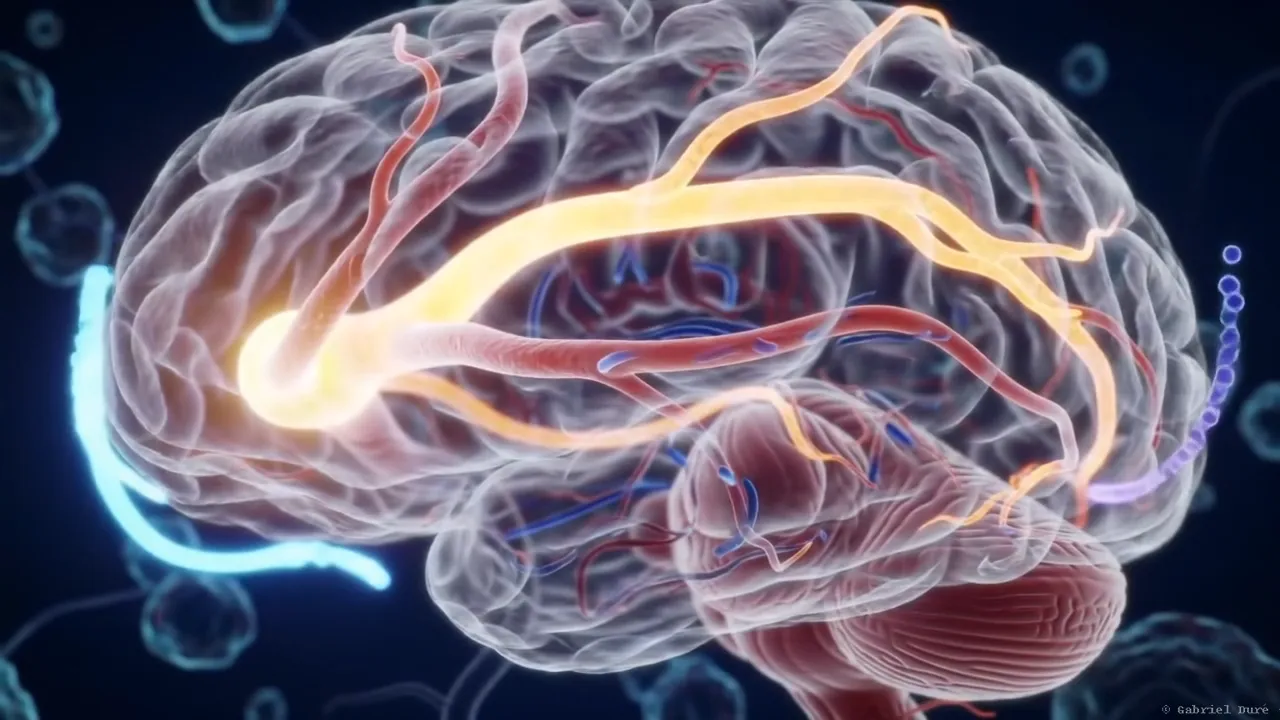
Obsessive thoughts do not only have a psychological impact; they are also deeply linked to neurobiological processes. Recent studies (2024–2025) have identified clear correlates between OCD and alterations in the brain circuits that regulate emotion.
🔹 Brain circuits involved
- Dorsolateral prefrontal cortex: Responsible for planning and judgment. Shows hyperactivity due to the effort of control.
- Amygdala: Key structure in threat detection. Exhibits over-activation, explaining irrational fear.
- Basal ganglia: Involved in habit formation. Shows dysfunctions in information filtering.
🔹 Neurotransmitters involved
- Serotonin: Its deficit is associated with symptom onset. Key in mood modulation.
- Dopamine: Related to motivation; its disruption contributes to compulsiveness.
- GABA: Inhibitory neurotransmitter; its reduction is associated with greater anxiety.
Metaphors for Understanding
- Normal worry: An alarm system functioning properly in response to real danger.
- Rumination: Getting stuck reviewing the failure report without being able to repair it.
- Pathological obsession: An alarm system constantly triggered by nonexistent threats, forcing rituals that reinforce the cycle.
🛠️ Practical Tips for Managing Obsessive Thoughts
- Observe without judging: Recognize the thought as a mental event, not a threat.
- Label the thought: Use phrases like "this is just an obsession."
- Reduce the inner struggle: Suppression usually reinforces the thought.
- Train your attention: Practice mindfulness and breathing exercises.
- Restructure the interpretation: Ask yourself — what real evidence do I have?
- Gradual exposure: ERP technique (with professional support).
- Build healthy routines: Regular exercise and sleep.
- Use writing as support: Write down the thought to see it "outside" yourself.
- Seek professional help: CBT and ACT have solid evidence bases.
- Cultivate acceptance: Stoic philosophy of accepting the uncontrollable.
📋 Mini Quiz: How Do I React to My Thoughts?
• Mostly A → Normal worry.
• Mostly B → Rumination.
• Mostly C → Pathological obsession (OCD).
Final Reflection
Obsessive thoughts remind us of our humanity. Our mind, with all its creative capacity, can also become a labyrinth. Understanding them through the lens of psychology, neuroscience and philosophy allows us to see that they are not enemies to be destroyed, but signals from internal processes that need to be heard and reinterpreted.
Normal worry serves an adaptive function; rumination warns us of emotional wounds still open; and pathological obsession reveals a brain circuit trapped in the hyperactivation of fear and guilt.
From a philosophical perspective, accepting the inevitability of certain thoughts — as the Stoics proposed — frees us from a futile struggle against the uncontrollable. And from contemporary psychology, learning to coexist with them without letting them rule our lives is an act of autonomy and dignity.
"The mind can be both a prison and a stage of freedom, and the path toward wellbeing begins when we stop fighting the shadow and start illuminating it with understanding, science and humanity."
Bibliographic References
- Descartes, R. (1641). Meditations on First Philosophy.
- Duré, G. (2025). Obsessive thoughts: When the mind gets trapped. Unpublished article.
- Ellis, A. (1994). Reason and Emotion in Psychotherapy. Birch Lane Press.
- Nietzsche, F. (1883). Thus Spoke Zarathustra.
- Psiconetwork. (2025). Obsessive-compulsive disorder: Neurobiological correlates.
Support Resources
Crisis and OCD helplines:
-
USA — Crisis Line988
-
OCD Foundation (IOCDF)
- International Chat (Befrienders)
Recommended Reading
- Barlow, D. H. - Anxiety and Its Disorders.
- Clark, D. A. - Cognitive-Behavioral Therapy for OCD.
- Hayes, S. C. - Get Out of Your Mind and Into Your Life (ACT).
Keep reading
Explore other topics linked to mental health and emotional wellbeing.